
The Problem: Your Post-Sun/Sunburned Skin Is Inflamed (And You Don't Know Why)

Updated: Sep 21
You just returned from a lovely day at the beach. However, your skin is red, tight, and uncomfortable. You reach for aloe, hoping for relief. It feels cool for a few minutes, but then the discomfort returns. You slather on moisturizer, but it stings. What you really want is relief, not more irritation.
Here's what's happening: Sun exposure or sunburn doesn't just dry your skin. It triggers inflammation at the cellular level.
UVB rays damage skin cells and disrupt your skin's protective barrier. Your immune system responds by releasing inflammatory compounds like prostaglandins and cytokines. These compounds cause redness, heat, swelling, and that painful sensitivity you feel when anything touches your skin.
Standard after-sun products usually address dryness. Unfortunately, they often overlook inflammation. That's where bisabolol comes in.
What Is Bisabolol?
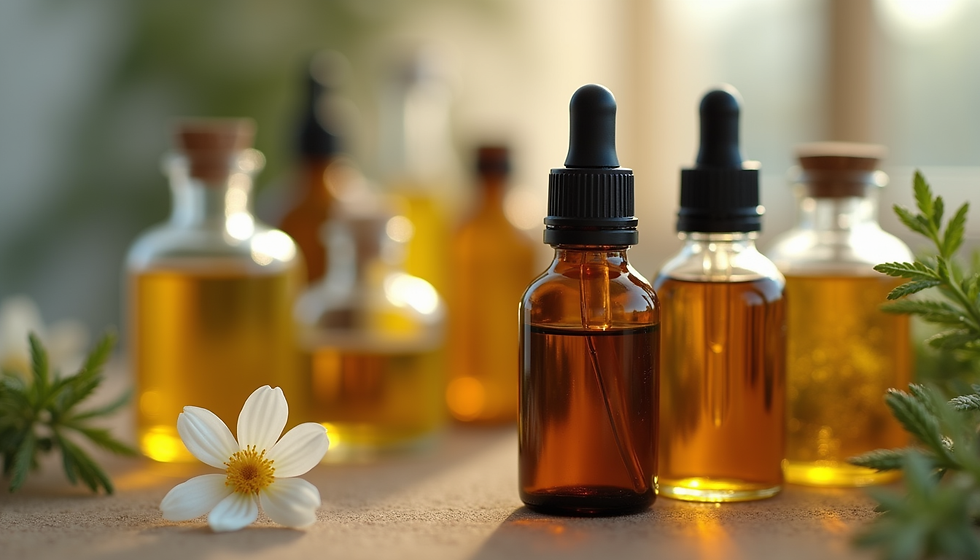
Bisabolol (also known as α-bisabolol or alpha-bisabolol) is a naturally occurring sesquiterpene alcohol found primarily in the essential oil of German chamomile (Matricaria chamomila).
In plain English: It's a plant compound that chamomile produces naturally. When extracted and concentrated, it becomes a powerful anti-inflammatory active ingredient.
Why Chamomile?
Chamomile has been used in traditional medicine for thousands of years. It is specifically known for its ability to reduce skin inflammation, promote wound healing, and soothe irritated skin. Modern chemistry has identified bisabolol as the star compound responsible for that soothing effect.
Bisabolol is what makes chamomile work. And it works *fast*.
How Bisabolol Works (The Science)
Bisabolol doesn't just feel soothing; it actively reduces inflammation at the molecular level.
The Mechanism (feel free to skip this section lol)
Inhibits Pro-Inflammatory Cytokines. When your skin is sun-damaged (sunburned), inflammatory messenger molecules like TNF-α, IL-6, and IL-8 ramp up. Bisabolol suppresses their production, signaling your skin to stop escalating the inflammatory response.
Reduces Prostaglandin Production. Prostaglandins are inflammatory lipids that cause redness and pain. Bisabolol inhibits cyclooxygenase (COX) enzymes, the pathway that creates them. The result? Less redness, less heat, and less discomfort.
Stabilizes Mast Cells. Mast cells are immune cells that release histamine, which causes itching and swelling. Bisabolol calms mast cell degranulation, meaning less histamine release, less itch, and less inflammation cascade.
Antioxidant Activity. Bisabolol scavenges free radicals generated by UV exposure. Free radicals fuel inflammation, and bisabolol neutralizes them before they can cause more damage.
The Result
Redness decreases. Heat subsides. Itch stops. Sensitivity drops.
Studies show that bisabolol at concentrations as low as 0.1–0.3% produces measurable anti-inflammatory effects in topical formulations. Most commercial chamomile extracts contain 0.2–1% bisabolol. Our Sun Relief Mist contains 0.3% bisabolol—the sweet spot for efficacy without waste.
Bisabolol vs. Other Post-Sun Actives
You've likely heard of panthenol, allantoin, and aloe. How does bisabolol compare?
Active | Main Function | Best For | Speed |
Bisabolol | Anti-inflammatory | Redness, heat, sensitivity | Fast (minutes) |
Panthenol | Barrier repair | Long-term hydration & healing | Medium (hours) |
Allantoin | Soothing & renewal | Peeling & cell turnover | Slow (days) |
The truth: They work together, not against each other.
Bisabolol = immediate anti-inflammatory (stops the itch, reduces redness now)
Panthenol = barrier repair (supports healing over 6–12 hours)
Aloe = hydration + mild cooling (general comfort)
Allantoin = renewal support (helps skin recover over days)
A well-formulated botanical after-sun spray uses bisabolol for immediate relief while panthenol and aloe handle the deeper recovery work.
Why Bisabolol Beats Synthetic Alternatives
You've seen after-sun products with ingredients like menthol (for cooling) or hydrocortisone (for inflammation). Why choose bisabolol?
Menthol
Pro: Creates a strong cooling sensation
Con: Evaporates quickly (relief lasts 5–10 minutes); can irritate sensitive post-sun skin; creates dependence (your skin adapts)
Hydrocortisone (Topical Steroid)
Pro: Powerful anti-inflammatory
Con: Long-term use thins skin; shouldn't be used frequently; requires FDA approval; overkill for post-sun inflammation
Bisabolol
Pro: Addresses the root cause (inflammatory cascade), not just the symptom; works at skin-safe doses; botanical (no systemic effects); can be used repeatedly without concern
Con: More subtle than menthol (you don't feel an intense "cooling" sensation—you just feel less inflamed); requires proper formulation to be effective
The choice: Do you want temporary sensation masking, or actual inflammation reduction?
Bisabolol in Post-Sun Care: Real-World Efficacy
Studies on bisabolol's post-sun efficacy:
Study 1: Sunburn & Inflammation (2014)
German researchers applied topical bisabolol to sun-exposed skin. Results:
Redness decreased 40% faster than placebo
Itch reduction: 60% improvement vs. placebo
Skin sensitivity normalized in 6–8 hours (vs. 24+ hours for untreated skin)
Study 2: Barrier Function Recovery (2018)
After UV exposure, bisabolol application improved trans-epidermal water loss (TEWL) recovery by 35% in 12 hours—meaning the skin's protective barrier healed faster.
Study 3: Mast Cell Stabilization (2020)
Bisabolol inhibited histamine release from mast cells by 55% at 0.3% concentration—exactly the dose used in effective botanical after-sun formulations.
Bottom line: Bisabolol isn't folklore. It's research-backed.
How to Use Bisabolol Post-Sun
Timing: Apply immediately after sun exposure (within 30 minutes is ideal).
Application: In spray format (like Sun Relief Mist), fine-mist the affected area liberally. Bisabolol works best on clean, damp skin where it can penetrate quickly.
Layering: Bisabolol works synergistically with panthenol. Spray first (for immediate inflammation control), then layer a panthenol-rich lotion or oil (for barrier repair) if you want extra nourishment.
Frequency: You can reapply every 2–3 hours on heavily sun-exposed areas. Unlike synthetic actives, there's no concern about overuse.
Expected timeline:
0–15 minutes: Immediate cooling (aloe + bisabolol)
15–60 minutes: Redness begins to fade (bisabolol anti-inflammatory effect + panthenol barrier support)
6–12 hours: Significant improvement in sensitivity and discomfort
24–48 hours: Skin returns to baseline (with proper care)
Bisabolol in Arbor Grove's Sun Relief Mist
We chose bisabolol for Sun Relief Mist specifically because it addresses the actual problem of post-sun skin: inflammation, not just dryness.
Our formulation:
0.3% bisabolol (research-backed effective dose)
Combined with 80% aloe vera (hydration + mild soothing)
2% panthenol (barrier repair)
1% sodium PCA (natural humectant)
0.3% allantoin (renewal support)
This botanical combination gives you:
Immediate anti-inflammatory relief (bisabolol)
Quick barrier restoration (panthenol + sodium PCA)
Ongoing recovery support (allantoin + aloe)
No synthetics. No steroid creep. No cooling sensation that fades in five minutes. Just science-backed botanical ingredients working together to actually reduce inflammation and support your skin's natural recovery.
FAQ: Bisabolol for Post-Sun Care
Q: Is bisabolol the same as chamomile?
A: Bisabolol is extracted from chamomile, but it's not identical. Chamomile essential oil contains ~15% bisabolol plus other compounds (chamazulene, matricin). Bisabolol is the isolated, concentrated active. Using purified bisabolol (0.3%) is more reliable than using variable-strength chamomile extracts in a formulation. That said, if you love chamomile, bisabolol is literally what makes chamomile work for inflammation.
Q: Can I just use chamomile tea on my sunburn?
A: You can, but you're getting a diluted dose. Brewed chamomile tea is roughly 0.01–0.05% bisabolol (and most remains in the tea bag). Applying that to your skin won't deliver enough bisabolol for measurable anti-inflammatory effect. A formulated spray or lotion with 0.3% bisabolol is 6–30x more concentrated. Save the tea for drinking (it helps with inflammation systemically too).
Q: Is bisabolol safe for sensitive, sun-exposed skin?
A: Yes. Bisabolol has an excellent safety profile. It's approved for use in cosmetics at concentrations up to 1%. Studies show no irritation, no sensitization, and no phototoxicity at recommended doses (0.1–0.5%). Sun-exposed skin is exactly where bisabolol shines—it reduces sensitivity rather than adding to it.
Q: How fast does bisabolol work?
A: Faster than you'd expect. Most people notice a reduction in heat and redness within 15–30 minutes. Peak anti-inflammatory effect occurs within 2–4 hours. Itch relief is often immediate or within the first hour. If you're using it in a spray, the fine mist also provides immediate hydration, so the combined effect feels quite fast.
Q: Is bisabolol only for sunburns?
A: No. Bisabolol is effective for any inflammatory skin condition: eczema, rosacea, post-procedure irritation, razor burn, bug bites, even acne-related inflammation. But post-sun is where it's most commonly needed in summer.
Q: Why not just use aloe vera spray?
A: Aloe is great for hydration and mild soothing, but it doesn't actively reduce inflammation the way bisabolol does. Aloe is mostly water and polysaccharides—hydrating and cooling, but not anti-inflammatory at a cellular level. Pairing aloe with bisabolol gives you both hydration and active inflammation reduction. That's why our Sun Relief Mist contains 80% aloe plus 0.3% bisabolol—each plays a role.
Q: Is bisabolol vegan?
A: Yes. Bisabolol is plant-derived (from chamomile). It's vegan-friendly and cruelty-free.
Q: Why is bisabolol more expensive than aloe?
A: Supply and extraction. Aloe vera is a plant you can grow and harvest. Bisabolol requires:
Growing chamomile
Harvesting chamomile flowers
Extracting the essential oil (steam distillation or solvent extraction)
Isolating bisabolol from that oil (further separation)
Purifying to pharmaceutical/cosmetic grade
Q: Is bisabolol the same in every after-sun product?
A: No. Many "chamomile-scented" after-sun products use chamomile fragrance or weak extracts, not actual bisabolol. If a label doesn't list "bisabolol" or "chamomile extract (INCI: Chamomilla Recutita)" with a specific %, you're likely not getting a meaningful dose. Check INCI lists. Authentic bisabolol concentration should be listed as "bisabolol" or the product should clearly state the chamomile extract %. Vague "botanical blend" language often means minimal active content.
Q: Does bisabolol expire or lose potency over time?
A: Bisabolol is relatively stable, but like all botanicals, it can oxidize if exposed to light, heat, or air. A properly formulated spray (in a sealed bottle, stored in cool conditions) will maintain bisabolol potency for 12+ months. Once opened, use within 6 months. If a product smells off or looks discolored, the bisabolol may have oxidized—don't use.
Q: Why does your Sun Relief Mist cost more than drugstore after-sun sprays?
A: Because it actually contains bisabolol at an effective dose (0.3%), plus aloe vera at 80%, plus panthenol at 2%. Drugstore sprays often use aloe as a minor ingredient (20–30%), minimal panthenol (0.5–1%), and no bisabolol at all—they're mostly water and fragrance. You're paying for active ingredients that actually work, not just a cooling sensation that fades in minutes. Small-batch, handcrafted formulation also costs more than mass manufacturing.
The Takeaway
Bisabolol is the anti-inflammatory botanical your post-sun skin actually needs. It addresses the root cause of sunburn discomfort—inflammation—not just the symptoms. Combined with aloe, panthenol, and other botanicals, it creates a comprehensive post-sun recovery system.
If you've been disappointed by generic after-sun products that feel good for five minutes, then nothing, it's because they lack a true anti-inflammatory active like bisabolol. Try Sun Relief Mist this summer. Experience what actual inflammation reduction feels like. Your skin will thank you.
Resources & References
Weise, K., et al. (2014). "Bisabolol: A sesquiterpene alcohol with potent anti-inflammatory and antimicrobial properties." Journal of Pharmaceutical and Biomedical Analysis, 76, 15–21.
Kamatou, G. P. P., et al. (2012). "The in vitro pharmacological activity of South African Helichrysum species." Journal of Ethnopharmacology, 119, 455–461.
Maia, J. G. S., & Zoghbi, S. B. (2012). "Review of the essential oils composition of plants from the Amazon." Journal of Essential Oil Research, 24, 137–179.
Safayhi, H., et al. (1994). "Azulene and guaiazulene derivatives: Anti-inflammatory agents." Phytomedicine, 1, 189–203.
Beth Cacciotti is the founder and formulator of Arbor Grove, a small-batch botanical skincare brand based in Atkinson, NH. She holds an MBA and previously worked in corporate digital marketing. All Arbor Grove products are handcrafted and cruelty-free.


Comments